Thursday, September 22, 2005

News from the New York Times

Mikaela says:
Access to news and opinion just got more expensive. The New York Times on-line has just instituted "TimesSelect," requiring a yearly $49.95 subscription fee for Op-Ed columns, business, and sports pages. Subscribers will also get exclusive opportunities to "engage" with columnists in video interviews and Web-only postings. All news, features, editorials and analysis will remain free, as will interactive graphics, multimedia and popular video minutes.

But before you get too bummed out (since I know many of us will choose NOT to pay this little tax on information), be aware that the quality of news in the Times may go down soon anyway (maybe because some of us, like yours truly, don't pay for news service? Don't they make enough off ads? Educate me, here, somebody!).

This from today's Democracy Now headlines:

NY Times to Lay-Off Hundreds of Workers
The New York Times Company announced that it plans to lay-off 500 workers in coming months--that's 4 percent of its workforce. The announcement came just hours after the Philadelphia Inquirer and the Philadelphia Daily News announced a planned buyout of 15 percent of its newsroom staff. The New York Times newspaper will cut 250 jobs, including 45 newsroom employees. The company's New England Media Group, which includes the Boston Globe, will lose about 160 jobs, including 35 in the Globe newsroom. The rest of the cuts will be made in other parts of the company, including its smaller regional papers and radio and television stations.

So this leaves even more need for local papers to step up and fill the void. Or bloggers, since it's really the Op-Ed columns for which I personally will be lamenting the loss. The difference between bloggers and columnists in my mind is a vital one: columnists get paid to do research and therefore have accountability. Bloggers? You get what you pay for.

Hmm... does that mean I should pay for the Times? Dammit!

Journal: minimum wage, party patrol, & clean women

marjorie says...

So…speaking of the media, what’s in the Journal today?

The first thing that caught my eye was the horrendous article on the front page about the minimum wage ordinance.


To the Journal: you’ve got to be more balanced than this. Why are all these anti-minimum wage people given top billing while Matt Henderson of Acorn is buried at the bottom of the story? Since Raburn, the CEO of Eclipse Aviation is the centerpiece of your story, why not put the fact that he doesn’t oppose the minimum wage increase on the front page? Perhaps the Journal could tell us how many people in their company make the minimum wage. Come on, Journal, how is it going to impact your bottom line?


To Raburn: look, your blatant false propaganda is gross. You know good and well that the passage in question does not provide for “anyone who wants to … come in to my factory, plop their butt down and stay there all day.” Rather, the passage allows members of the public access to non-work areas that are otherwise open to the public generally, such as parking lots, sidewalks, and pedestrian area. Why can’t you make your argument based on the actual wording in the passage?? What? Oh--that’s right--you have to make a big exaggeration because you *know* it isn’t that big of a deal.


Let’s see…What else?

More on the overbearing Party Patrol in the Metro section.

Look, it stretches my imagination almost beyond belief that a fairly small party of family and friends of our county manager Thaddeus Lucero would warrant the Party Patrol *busting* their way into a private home and *forcing* people to leave. What is this city coming to when a police unit is authorized to bust into private homes because people are throwing a party? Do we really need our own Gestapo in Albuquerque? How many of you have heard anecdotal stories of what the young people of Albuquerque are subject to by this patrol? It’s not right. I want young people to be safe but I don’t think the way to do that is to turn them into criminals. And now, we have the Party Patrol targeting adult parties. Thaddeus, I’m sorry it happened to you but hopefully this incident will cause greater scrutiny of the practices of this unit.

Finally, yeah…we always knew we were cleaner than the guys!!

A study done at four public venues in Atlanta, New York, San Francisco and Chicago found that on average 25% of men don’t wash their hands before leaving the bathroom…compared to 10% of women. No surprise there. Sorry!

Wednesday, September 21, 2005

Onion Headlines

Mikaela says:
Oh, boy! They did it again.

*Political-incorrectness alert: do NOT read on if you're a squeamish lefty!

Bush Braces as Cindy Sheehan's Other Son Found Drowned in New Orleans
"Before Sheehan moved to New Orleans, he was a struggling coho-salmon fisherman in Oregon's Klamath Basin. However, when the Bush Administration relaxed federal protection of the endangered fish, Sheehan's catch became contaminated with mercury. He gave up fishing and moved to Oakland, CA, where he opened a free clinic, which lost its federal funding in 2002 for giving out oral contraceptives to poor women.
...
Sheehan moved to New Orleans in 2004 to take a year off from the University of California at Berkeley, where administrators had temporarily suspended the stem-cell research program in which he was enrolled in hopes of helping to combat his younger sister Ruth's spinal meningitis. Friends report that his public spirit continued in the Big Easy, as he delivered meals to elderly New Orleans residents affected by recent Medicare cuts, and doggedly petitioned the Justice Department for the release of his life partner, Amin Sagheer, who has been detained without charge at Guantanamo Bay for nearly three years.
...
Cindy Sheehan was unavailable for comment, as she was busy trying to contact her lone surviving son Teddy, a meteorologist studying global warming with the International Geophysical Foundation in Antarctica, who is believed to be marooned on a 45-square-mile chunk of the shrinking Ross Ice Shelf that broke off Tuesday morning."

Scalia Goes on Abortion Bender After Being Passed Over for Chief Justice
NORFOLK, VA—Saying "Fuck this shit, I'm stopping beating hearts with my bare hands," Justice Antonin Scalia, overlooked for the vacated position of Supreme Court chief justice, went on a spiteful abortion-performing bender over the weekend. "If I'm not going to be permitted a lasting judicial legacy, to hell with law and order," said Scalia, the conservative Reagan appointee who has served on the court since 1986. "I worked my ass off for 20 years, and no one cares. So, who gives a shit? Safe, legal abortions for all. Who wants one?" Scalia added that 2000 presidential candidate Al Gore "totally won that election, any idiot knows that."

Here's hoping for a new "politics as usual"

Mikaela says:
Not only is mainstream media not done, as Sophie argued on Duke City Fix yesterday, neither is mainstream politics.

Just when I was about to throw all the politician babies out with the toxic Delta bathwater, John Kerry (is he STILL campaigning???) gave a speech at Brown University that actually demonstrates an ability to speak persuasively to the big picture we lefties should be keeping in mind as we hear the Bush Administration's reconstruction attempts over the next few months.

Unfortunately, the fact that Kerry would actually GIVE this speech points to prospect that he's NOT campaigning, because what democrat is willing to speak to their values in an election year -- or ever -- these days?

Let's hope there's more of them in the days to come. Democratic Senator Harry Reid is setting a similar tone of value-based action in voting AGAINST John Roberts' nomination for Supreme Court Chief Justice. We hear too much that Democrats need to roll over so they can stand up when it's REALLY time. Well, folks, if these dark days aren't the right time to start fighting for a just and environmentally responsible society, I don't know what will be. I don't even want to think about how bad THAT would have to be. (See allso David Sirota's persuasive and informative piece about this.) Instead of "saving up" our opposition, how about starting to build up our political stand-up muscles? They're woefully atrophied at this point. We need all the practice we can get.

Hear us, democratic leaders? Get up; stand up!

Below is an edited [and emphasized] version of Kerry's very eloquent speech (Who's writing his speeches nowadays, by the way? Anyone know? Damn good stuff. A little heavy on the healthcare angle, but what can you expect, given the source?)
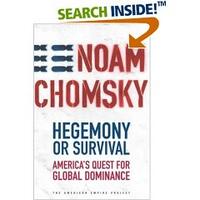
(What's interesting, too, are the echoes in here of Hugo Chavez in his interview on Democracy Now, who credited his thinking to Noam Chomsky. Huh. Go figure. So it's all thought out...Now action, dammit!):

"[F]or four and a half years, real life choices have been replaced by ideological agenda, substance replaced by spin, governance second place always to politics.
...
Natural and human calamity stripped away the spin machine, creating a rare accountability moment, not just for the Bush administration, but for all of us to take stock of the direction of our country and do what we can to reverse it. That's our job -- to turn this moment from a frenzied expression of guilt into a national reversal of direction.
...
This is about ... a truly systemic effort to distort and disable the people's government, and devote it to the interests of the privileged and the powerful. It is about the betrayal of trust and abuse of power.

    ...
    [T]he rush now to camouflage their misjudgments and inaction with money doesn’t mean they are suddenly listening. It's still politics as usual. The plan they’re designing for the Gulf Coast turns the region into a vast laboratory for right wing ideological experiments. They’re already talking about private school vouchers, abandonment of environmental regulations, abolition of wage standards, subsidies for big industries - and believe it or not yet another big round of tax cuts for the wealthiest among us!

    The administration is recycling all their failed policies and shipping them to Louisiana. After four years of ideological excess, these Washington Republicans have a bad hangover -- and they can't think of anything to offer the Gulf Coast but the hair of the dog that bit them.

    And amazingly -- or perhaps not given who we’re dealing with -- this massive reconstruction project will be overseen not by a team of experienced city planners [woo-hoo!!!] or developers, but according to the New York Times, by the Chief of Politics in the White House and Republican Party, none other than Karl Rove -- barring of course that he is indicted for "outing" an undercover CIA intelligence officer.

    Katrina is a symbol of all this administration does and doesn't do. Michael Brown -- or Brownie as the President so famously thanked him for doing a heck of a job - Brownie is to Katrina what Paul Bremer is to peace in Iraq; what George Tenet is to slam dunk intelligence; what Paul Wolfowitz is to parades paved with flowers in Baghdad; what Dick Cheney is to visionary energy policy; what Donald Rumsfeld is to basic war planning; what Tom Delay is to ethics; and what George Bush is to “Mission Accomplished” and "Wanted Dead or Alive."
    ...
    [This administration] has consistently squandered time, tax dollars, political capital, and even risked American lives on sideshow adventures: A war of choice in Iraq against someone who had nothing to do with 9/11; a full scale presidential assault on Social Security when everyone knows the real crisis is in health care - Medicare and Medicaid. And that's before you get to willful denial on global warming; avoidance on competitiveness; complicity in the loss and refusal of health care to millions.

    Americans can and will help compensate for government's incompetence with millions of acts of individual enterprise and charity, as Katrina has shown. But that’s not enough. We must ask tough questions: Will this generosity and compassion last in the absence of strong leadership? Will this Administration only ask for sacrifice in a time of crisis? Has dishonesty in politics degraded our national character to the point that we feel our dues have been paid as citizens with a one-time donation to the Red Cross?

    Today, let’s you and I acknowledge what’s really going on in this country. The truth is that this week, as a result of Katrina, many children languishing in shelters are getting vaccinations for the first time. Thousands of adults are seeing a doctor after going without a check-up for years. Illnesses lingering long before Katrina will be treated by a healthcare system that just weeks ago was indifferent, and will soon be indifferent again.

    For the rest of the year this nation silently tolerates the injustice of 11 million children and over 30 million adults in desperate need of healthcare. We tolerate a chasm of race and class some would rather pretend does not exist. And ironically, right in the middle of this crisis the Administration quietly admitted that since they took office, six million of our fellow citizens have fallen into poverty. That’s over ten times the evacuated population of New Orleans. Their plight is no less tragic - no less worthy of our compassion and attention.
    ...
    This is the real test of Katrina. Will we be satisfied to only do the immediate: care for the victims and rebuild the city? Or will we be inspired to tackle the incompetence that left us so unprepared, and the societal injustice that left so many of the least fortunate waiting and praying on those rooftops?

    That’s the unmet challenge we have to face together. Katrina is the background of a new picture we must paint of America. For five years our nation's leaders have painted a picture of America where ignoring the poor has no consequences; no nations are catching up to us; and no pensions are destroyed. Every criticism is rendered unpatriotic. And if you say “War on Terror” enough times, Katrina never happens.

    Well, Katrina did happen, and it washed away that coat of paint and revealed the true canvas of America with all its imperfections. Now, we must stop this Administration from again whitewashing the true state of our challenges. We have to paint our own picture - an honest picture with all the optimism we deserve - one that gives people a vision where no one is excluded or ignored. Where leaders are honest about the challenges we face as a nation, and never reserve compassion only for disasters.

    Rarely has there been a moment more urgent for Americans to step up and define ourselves again. On the line is a fundamental choice. A choice between a view that says “you’re on your own,” “go it alone,” or “every man for himself.” Or a different view - a different philosophy - a different conviction of governance - a belief that says our great American challenge is one of shared endeavor and shared sacrifice.
    ...
    [F]or those who still believe in the great tradition of Americans doing great things together, it’s time we started acting like it. We can never compete with the go-it- alone crowd in appeals to selfishness. We can’t afford to be pale imitations of the other side in playing the ‘what’s in it for me’ game. ... It’s time we framed every question - every issue -- not in terms of what’s in it for ‘me,’ but what’s in it for all of us?

    And when you ask that simple question - what’s in it for all of us? [I'd add that we should ask this with 'us' as global citizens] - the direction not taken in America could not be more clear or compelling.

    • Instead of allowing a few oil companies to drill their way to windfall profits, it means an America that understands we can’t drill our way to energy independence, we have to invent our way there together.
    • Instead of making a mockery of the words No Child Left Behind when China and India are graduating tens of thousands more engineers and PhDs than we are, it means an America where college education is affordable and accessible for every child willing to work for it.
    • Instead of tax cuts for the wealthiest Americans, it means an America that makes smart investments in your future like funding the science and research and development that will assure American technological leadership.
    • Instead of allowing lobbyists to rewrite our environmental laws, it means an America where lakes and rivers and streams are clean enough that when a family takes the kids fishing, it’s actually safe to eat the fish they catch.
    • Instead of letting a few ideologues get in the way of progress that can make us a stronger and healthier society, it means an America where the biology students here today will do the groundbreaking stem cell research tomorrow.
    • And instead of stubbornly disregarding intelligence, using force prematurely and shoving our allies aside, it means an America that restores its leadership in the world. An America that meets its responsibility of creating a world where the plagues of our time and future times - from terror to disease to poverty to weapons of mass destruction to the unknown - are overcome by allies united in common cause, and proud to follow American leadership.
    ...
    This Administration and the Republicans who control Congress give in to special interests and rob future generations. Real leadership stands up to special interests and sets the course for future generations. And the fact is we do face serious challenges as a nation, and if we don’t address them now, we handicap your future. My generation risks failing its obligation of assuring you inherit a safer, stronger America. To turn this around, the greatest challenges must be the starting point. I hope Katrina gives us the courage to face them and the sense of urgency to beat them.

    That’s why the next few months are such a critical time. You’ll read about the Katrina investigations and fact-finding missions. You’ll get constant updates on the progress rebuilding New Orleans and new funding for FEMA. Washington becomes a very efficient town once voters start paying attention.

    But we can’t let political maneuvering around the current crisis distract people from the gathering, hidden crises - like energy, environment, poverty, healthcare and innovation - that present the greatest threats to our nation’s competitiveness and character. The effort to rebuild New Orleans cannot obscure the need to also rebuild our country.

    So realistically, I’m sure you’re wondering: How do I change all this? What can I do? The answer is simple: you have to make your issues the voting issues of this nation. You’re not the first generation to face this challenge.

    I remember when you couldn’t even mention environmental issues without a snicker. But then in the 70’s people got tired of seeing the Cuyahoga River catch on fire from all the chemicals. So one day millions of Americans marched. Politicians had no choice but to take notice. Twelve Congressmen were dubbed the Dirty Dozen, and soon after seven were kicked out of office. The floodgates were opened. We got the Clean Air Act, The Clean Water Act and Safe Drinking Water. We created the EPA. The quality of life improved because concerned citizens made their issues matter in elections. [Look! He's using HISTORY to argue a point. Crazy, huh? That's what getting A's at a good university will do for ya.]
    ...
    Moments like Katrina ... help you define your service to your fellow citizens. I’ll never forget as a teenager standing in a field in October of 1957 watching the first man made spacecraft streak across the night sky. The conquest, of course, was Soviet - and while not everyone got to see the unmanned craft pass overhead at 18,000 miles per hour that night - before long every American knew the name Sputnik. We knew we had been caught unprepared.

    In the uncertain years thereafter, President Kennedy challenged Americans to act on that instinct. He said, "This is a great country, but I think it could be a greater country...the question we have to decide as Americans," he said, is "are we doing enough today?"

    Today, every American knows the name Katrina -- and once again we know our government was undeniably unprepared, even as Americans have shown their willingness to sacrifice to make up for it.

    But in these uncertain weeks of Katrina's aftermath, we must ask ourselves not just whether a great country can be made greater -- the sacrifice and generosity of Americans these last weeks answered that question with a resounding yes.

    No, our challenge is greater - it’s to speak out so loudly that Washington has no choice but to make choices worthy of this great country - choices worthy of the sacrifice of our neighbors in the Gulf Coast and our troops all around the world.

    What's in it for all of us? Nothing less than the character of our country - and your future."

    Monday, September 19, 2005

    On competition, and wishing local media would step up

    Maggie says:
    On Saturday I had one of the best party conversations I've had in ages, featuring me feeling extra sparky and a local media hound/Boston refugee who was more than satiating my desire to have smart talk about Boston and the Sox and Albuquerque and politics and... our local media.

    Here's the thing: we agreed that what Albuquerque's print media is suffering from is a lack of competition and a desire to be better. Print media in town is very pigeonholed as to what they each provide - and worse, they're perfectly content with the tiny little space they've carved out and want nothing more. The thing is, if you have a handful of newspapers doing only a tiny, tiny thing well, who's going to do everything else they don't, and what are Albuquerque residents supposed to read and be satisfied? We can each read it all, but we'll still be unsatisfied. And that's the problem. In a town with lots of media outlets, shouldn't each make the other better?

    Imagine a town where there are two daily newspapers owned by the same company and housed in the same building. Each does something a little different, each does a couple of things well. But neither is a good newspaper. Neither provides enough of anything to its readers. And worse, they know that and are okay with it. That's the Albuquerque Tribune and the Albuquerque Journal. Now spice it up a little: mix in the Alibi, ABQ's alternative weekly. It used to be great, but now it's ho-hum, too. What's a local reader to do? Enter bloggers. Now that Duke City Fix is in town, we have folks asking the questions our media outlets aren't proactive enough to ask themselves. We have clear evidence on the Fix and tons of other local blogs that smart people aren't satisfied with what they're getting from their newspapers. I don't think the Web is the answer, though - I'm old-school in that I'll probably open up a printed newspaper every morning until I die - the answer is that our newspapers need to be better. And we shouldn't have to shame them into improving themselves, either. Why don't they want to be better?

    Here's where competition comes in. My new friend and I imagined a scene straight out of Anchorman (you know which one I mean), where our local print reporters would fight it out in a back alley for bragging rights, sabotage each other's printing presses, blow up each other's computers in the name of good, old-fashioned competition. Because Trib and Journal reporters meekly waving to each other every morning is not the way to kick each other's asses. It clearly isn't the way to produce a better paper.

    I feel like the tide is turning in that via the Web, there's lots and lots of talk about folks being pissed with local print media. So our dissatisfaction is documented. Now: how will our newspapers respond?

    America Ages

    by Mikaela

    The body politic,
    leprous and shedding,
    truncates visions
    at alarming rates,
    stared down
    by blind justice
    while carnivores
    in the belly of the beast
    fall all over themselves
    for the last
    juicy
    bite.

    Some of us --
    poorer, darker,
    politically awake --
    free radicals
    (mostly mysterious
    with functions largely unknown)
    causing vague discomfort
    and sometimes fear --
    scatch with tiny nails
    on the inner walls
    of democratic flesh,
    trying to cause a cancer
    that just might save us all.

    Rebuilding: by whom, for whom?

    Maggie says:
    A lot of my recent anger and concern about Katrina falls into two basic themes, and they're very forward-looking: who is rebuilding the Gulf cities, and who they're being rebuilt for.

    No-bid contracts or WPA approach?
    We all know how badly Halliburton misspent public funds in Iraq and how dishonestly they were given the rebuilding contracts to begin with. So an optimist might assume that the government would steer clear of repeating the same mistakes with Katrina rebuilding, if only to avoid the messiness of having to explaining themselves to the public. But the administration's sheer arrogance and lack of concern about doing the right thing has once again beaten down any overly optimistic notions that suckers like me might still be carrying around.

    The issue with these no-bid contracts really isn't that the companies are tied to the administration. It's not even that they were selected outside of a fair process where they would have had to compete for a contract in a public arena. The issue is that we see an extremely top-down administration handing out contracts to rebuild places without involving the people of those places in the decision-making process.

    My questions are many, but include: why are the feds even involved in rebuilding efforts, beyond simply handing over the money to the appropriate local groups or local choices for contracts? Why aren't the people of New Orleans, Gulfport, and those tiny Mississippi towns being empowered to plan for themselves? What are the implications on the ground of federal rebuilding contracts that will be inevitably laden with federal priorities and conspicuously lacking local ones? What do federal rebuilders know about local character? About special places and intricacies of character that only locals know?

    In Albuquerque to support the minimum wage increase last week, former Vice Presidential candidate John Edwards presented the single best idea I've heard regarding how the planning and rebuilding of devastated cities should take place: a federally-sponsored Works Progress Administration (WPA) type of program that would employ the thousands of people left unemployed to rebuild their own hometowns. A program like this would help families in the Gulf get back on their feet since their jobs have been destroyed and would charge the people of destroyed places with the rebuilding of those places, ensuring a direct connection between who lived there before Katrina and how places will look after Katrina. Importantly, a WPA-style program would also help ensure that the real needs of people are met by rebuilding, and not just the needs of vacationers. (And don't even say there's no money - the feds are spending tons of money on the no-bid contracts already, and no locals are getting employed by that choice. But wait - no connected corporations would profit from a WPA program, either. Oh well.) This brings up my next point:

    Why plan to have more poor people?
    This struck me really strongly listening to Morning Edition today, but as soon as I made the connection I realized how strong this theme has been playing out all throughout LA and MS the last few weeks. The mayor of Ocean Springs, Mississippi was taking a reporter on a tour of her town and pointing out the massive destruction from Katrina. Her refrain throughout the interview was, "We'll rebuild this town better than ever, stronger than ever before." And as she talked about imagined condos, golf courses, and destination spots, I wondered: how do poor people fit into her vision? I don't know a thing about Ocean Springs - maybe it was an affluent town to begin with - but the mayor's vision was most certainly an affluent one. I saw the same thing on Dateline a couple of weeks ago, as another mayor was pointing out the historic African-American sites around town that sustained major damage, then talked about new condos and golf courses (noticing a theme here?) in the next breath. In New Orleans, we see bravado from French Quarter restauranteurs and then hear rhetoric wondering if New Orleans' poor residents will come back. The connection isn't being made, though: if the town is built only by restauranteurs for restaurant patrons, will the poor be able to come back if they want to?

    All of this is heavy planning material. Most people envision ideal places as ones of stability and a lack of poverty, so maybe it's natural for mayors to dream of a rebuilt town where everyone has enough to get by. But when rebuilding starts, that idealistic notion becomes draconian gentrification all too quickly. When funds start pouring in and priorities take shape, a dream of condos and golf courses will rapidly become a real place full of condos and golf courses and nothing else. What's to stop them from building yuppie playgrounds if the real people of these places aren't involved in the planning efforts? Again, a WPA program would be the answer here.

    More questions: How does a city successfully - and humanely - transition from a place with too much poverty to a place where the poor have a better chance at stability and opportunity? How does that happen when it's easier to pretend the poor don't exist at all, or to forge ahead and assume the poor will struggle as before, because that's just the way it goes in America? How can a planning process honestly assess the needs of the poor when there is no honest planning process?

    On a sidenote, my mom and the company she works for have helped give a new chance to a family from New Orleans. They are now starting over in Raleigh, NC and just moved into a fully-furnished, rent-free apartment in a community where they're being welcomed as part of the community. They were overwhelmed when they walked into their new home at the simple pleasures of being away from the shelter: the ability to sleep in as long as they want, take showers in privacy, cook meals, have guests over, just being a family in a home again. Right away, they told my mom that they had no plans on going back to New Orleans. To them, the hurricane was "a sign from God." Nothing had ever worked out for them in New Orleans, they said, and this was their big chance to start over in a place where life hopefully wouldn't be so hard.

    Will the new New Orleans be happy that families like this one are staying away? Is it easier to rebuild a tourist destination if the only people in town are ones tourists would approve of? Or will they be urged back because they are New Orleans, whether or not Midwestern tourists recognize that? How prepared will the city be to give them a better shot at life? How prepared does it want to be?

    Our absence

    Yes, we've been quiet. Especially Marjorie and I. See, Marjorie and I have been busy planning (and not letting Mikaela help us, hence all her posting) a big birthday bash for Mikaela. It went down Saturday night in the South Valley, and we're still recovering. Photos may appear over on m-pyrical this week. If we're not too embarrassed when we look at them, that is. :-)

    Proof Positive: m-pyre lives

    Readiness Alert: NOW it's time for finger pointing

    Mikaela says:
    More on this when I have a moment to do more research (GOT to get some work done today!), but it's too important not to post immediately. If anyone gets the skinny in the meantime, please forward sources!

    This from the headlines of Democracy Now:

    White House Tries To Blame Flooding on Environmentalists

    The Mississippi Clarion Ledger is reporting that it has obtained internals emails from the Justice Department that indicates the Bush administration may be seeking to blame the flooding caused by Hurricane Katrina on environmentalists. The Justice Department is seeking information from various U.S. attorneys offices on whether they have defended any cases involving environmental groups seeking to block the Army Corps of Engineers from working on the levees around New Orleans.

    Thursday, September 15, 2005

    Agricultural Preservation: Can we save a dying tradition?

    Mikaela reports:
    The focus of this planning conference is agricultural preservation. I thought I'd share a few snippets and initial thoughts:

    What are the trends affecting agriculture in the U.S.?

    • 15% of the farms in the U.S. produce 90% of agricultural output.
    • These 15% are farms with sales over $100,000.
    • 78% of all farms in the U.S. have sales less than $10,000.
    • Of these farms, the average farm income is -$4,000.
    • Big farms and small farms are both growing in number.
    • More people are farming because they like the lifestyle and working second or third jobs to support their farming habits!
    • America has the "full-stomach dilemma." Agriculture industry can't depend on increased demand here at home (our problems all center on OVER-nutrition in that we're fat fat fat and eat processed food), so any growth must come from export.
    • Agriculture CAN grow by valuing non-food amenities that agriculture provides, including open space, lifestyle choices, cultural heritage, wildlife habitat, and air filtration (carbon sequestration).
    • Agriculture can also transition to value-added crops, such as organics, gourmet items, local specialties, etc.
    • Local agriculture may also get a boost from rising oil/gas prices, since local farmers don't have to pay for higher transportation costs.
    So who are all these people getting into farming, and what land are they buying?

    Picture it: white people w/ money enough for hobby farming and retirees are buying:

    • Land in rural -- but not TOO rural -- areas. (It's gotta still be a reasonable drive to cultural centers and shopping centers)
    • Land close -- but not TOO close -- to neighbors (land w/ neighbors sells for higher prices than land all alone in remote areas)
    • Land close to public land (leveraged open space that will stay open space)
    • Land close to pretty bodies of water (lakes, streams, etc.)
    Where?
    • The higher, the better, areas (higher elevations add value to land)
    • The greener, the better, areas
    • The more scenic, the better, areas (hilly, rough landscapes sell for more)

    Why are they doing it when it doesn't make money?

    The answer, backed up by multiple NMSU researchers, is "just because." The lifestyle itself is the amenity, and it accounts for 75% of the value of agricultural land.

    "Ranching has never provided a great living, but it sure is a great life."

    New Mexico Planning Awards

    Interesting to know what good work is being awarded around NM.

    Citizen planner award goes to NM Senator Cisco McSorley for his part in protecting the localized impact fee provision in the Planned Growth Strategy. Mostly, this goes back to recognizing and respecting local decision-making.

    Student award goes to a group project from our own UNM-CRP program, a paper on AMAFCA that explores how to protect and enhance our ditches as cultural and community amenities. Go lobos!

    Economic development award goes to a planning effort out of Santa Fe that looked at design and capitalizing on the unique assets within the community on which to base future efforts of revitalization and economic activity.

    Collaborative and innovation award goes to Taos County Comprehensive Plan for its water and natural resource section, which looked to partnerships among local govts, national forest, and LANL to implement growth controls through linking land-use to water availability.

    Best plan award goes to Hobbes for its Comprehensive Development and Community Plan. The mayor said Hobbes developed out of need, not desire, when oil/gas companies had to provide for its workers. The plan attempts to redefine itself as a community, as a city, "a community of desire, not community of need." The plan focuses on implementable steps with clearly-defined responsibility by each agency.

    Learning from Generals on Planning

    Mikaela says:
    These gems from opening comments from today's planning conference.

    General Patton -- "A good plan today is better than a perfect plan tomorrow."

    General Eisenhower -- "Plans are nothing; planning is everything."

    On a side note, generals are endearing themselves to me lately, what with the stellar leadership and decision-making in the chaos of the Katrina aftermath and with generals -- retired and soon-to-be-retired-against-their-will -- going on record against Iraq and other overextension of U.S. military use around the world. Within the larger quest for empire by extension of military (and economic) force, there are those who disagree. These are exactly the kind of experts that those in the Bush administration have no use for, not just because they don't simply tell them what they want to hear, but because Bush and his cronies seem to have no use for experience as opposed to political cronism, as we've seen this week in FEMA revelations. In planning, we call these the guerillas in the bureaucracy. Go generals! The good kind, anyway.

    Humor from David Brooks?

    Mikaela muses:
    I don't often find myself on the same side of things as David Brooks of the New York Times (understatement, people!), but I had to chuckle at today's spoof on the Roberts confirmation hearings.

    A sample:

    John Roberts Jr. Aw, shucks. This has been a humbling experience, Mr. Chairman. To think that a boy from an exclusive prep school and Harvard Law could grow up and be nominated for the Supreme Court - it shows how in America it's possible to rise from privilege to power! That's the hallmark of our great nation.

    So while, of course, I can't talk about specific cases, or any emotions, weather patterns or sandwich meats that may come before the Supreme Court at any time between now and my death in 2048, I do want to reiterate that I feel humbled by this experience. I feel humbled that my wife is dozing off behind me. I feel humbled by this committee's inability to lay a glove on me. And I feel modest. You see this suit? I skinny-dip in this suit. That's how modest I feel.

    ...
    Jeff Sessions
    This may be a good moment to remind my colleagues on the other side of the aisle that in this country unelected judges don't write the laws. We have unelected lobbyists to do that. Under our system, judges merely interpret the law and decide presidential elections.

    Arlen Specter Senator Sessions, let me interrupt you right there. We're not here to argue among ourselves and ignore the nominee. We're here to deliver 30-minute speeches disguised as questions and ignore the nominee.

    Our fair democracy

    Mikaela writes:

    This from Salon.com although it's been all over other websites. Go justice! This is democracy, huh? Now it doesn't sound so hypocritical when I hear Bush say this is what he wants for Iraq. Power in the hands of the moneyed few ... sounds about right. Go democracy!

    I've always known information is power, but this makes it very clear that it goes both ways.


    Plame, "blame game" or the Downing Street memos?

    Remember Karl Rove and Valerie Plame? The Downing Street memos? Those stories have taken a back seat to Hurricane Katrina, and the GOP would like to keep it that way.

    As Senate Republicans Wednesday killed a Democratic plan for an independent, 9/11 Commission-style investigation into the government's response to Hurricane Katrina, their colleagues in the House of Representatives were blocking Democratic efforts to learn more about the Bush administration's role in outing Valerie Plame and its efforts to "fix" prewar intelligence on Iraq.

    On party-line votes Wednesday, Republicans on the House Judiciary Committee and the House International Relations Committee blocked two resolutions that would have asked the Justice Department and the State Department to turn over documents related to the Plame leak. Republicans on the International Relations Committee also blocked two measures that would have sought documents related to prewar intelligence on Iraq.

    Bush Haikus

    marjorie says...


    Bush Haikus
    by Karlos Schmeider

    bush hates black people

    according to kanye west

    and everyone’s eyes


    george bush hates poor whites

    asians and mexicans too!

    but loves rich people


    george bush loves rich people

    of any race, color or creed

    cash is all you need


    george bush likes to fish

    while poor folk die in the street

    he just doesn't care


    my mom always said

    don't trust smirky faced texans

    from connecticut

    Bush needs more than a bathroom break

    Maggie says:
    Too good not to pass on. Via Reuters.

    At yesterday's United Nations session, W found himself in a typical situation: mind drifting, attention wandering, really not able to keep up with the discussion. Hmmm.... maybe a little time alone would help him out, help him regain his "focus." And so he writes a note to his favorite gal-pal Condi:

    The Reuters caption: U.S. President George W. Bush writes a note to Secretary of State Condoleezza Rice during a Security Council meeting at the 2005 World Summit and 60th General Assembly of the United Nations in New York September 14, 2005. World leaders are exploring ways to revitalize the United Nations at a summit on Wednesday but their blueprint falls short of Secretary-General Kofi Annan's vision of freedom from want, persecution and war.

    Can't read what he's writing? Here's the close-up:


    "I think I may need a bathroom break?"

    Hmmm... can't imagine why the U.S. is falling short of Kofi Annan's vision. Maybe because trips to the bathroom are more important to our president than a world free "from want, persecution, and war."

    Hypocrisy

    Slate.com

    Don't conservatives ask, "Why didn't they choose to leave when they had the option?"

    From Slate.com

    ABQ callers kick the Chamber's ass!

    Maggie says:
    So I've ranted about KUNM's format/scheduling before and yes, I still have the same issues when I tune in hoping for some news and get... other stuff instead. But this morning's call-in show was great. If every week's call-in show was as good as this morning's (a show on Mountain View a couple weeks ago also scored high marks in my book), then I'd be a much happier KUNM listener.

    This morning's topic was the upcoming ballot question to raise the ABQ minimum wage to $7.50/hour. The guests included someone from Santa Fe's successful effort at raising their minimum wage (they raised theirs to $10.50, for some perspective) and a woman from the Greater Albuquerque Chamber of Commerce. (Sorry, I didn't catch anyone's name - I think the woman was named Kathy?)

    So I prepared myself for the usual back and forth between the Chamber saying businesses will all leave Albuquerque en masse for Rio Rancho or Los Lunas if the minimum wage passes and the man from Santa Fe talking about how none of that's happened there. The best moment in their exchange came when the Chamber woman tried to say that a tobacco company had to leave Santa Fe for a location along I-25 after the measure passed, and the man countered that actually, the tobacco company moved at the request of their employees, none of whom could afford to live in Santa Fe and wanted to shorten their commutes from Albuquerque. Classic!

    So their back and forth, I expected. But I didn't expect the local callers to be so kick-ass and just plain awesome. Caller after caller pounded Chamber Kathy's logic into the ground and called her out for what she is - a proponent of low wages, unfair working conditions, and a race to the bottom. Today's callers gave her no slack and never lost their ground when she retorted with her so-called expertise. And they supported with full force the more controversial elements of this bill, including the provision for organizing. As one caller put it: "Shouldn't letting people go into businesses and tell workers of their legal rights be something we should all support no matter what? Why don't you want workers to know their legal rights, Kathy? Don't you know this is America?"

    So I'm thinking that things are looking very good for the minimum wage increase. Polling has already supported that, but the call-in show just made my morning today. Thanks, Albuquerque. You rock!

    And then after the show, when I was really looking forward to a customary 5-minute NPR headline recap, KUNM instead launched right into "Performance Today." Sigh.